Course Learning Outcomes
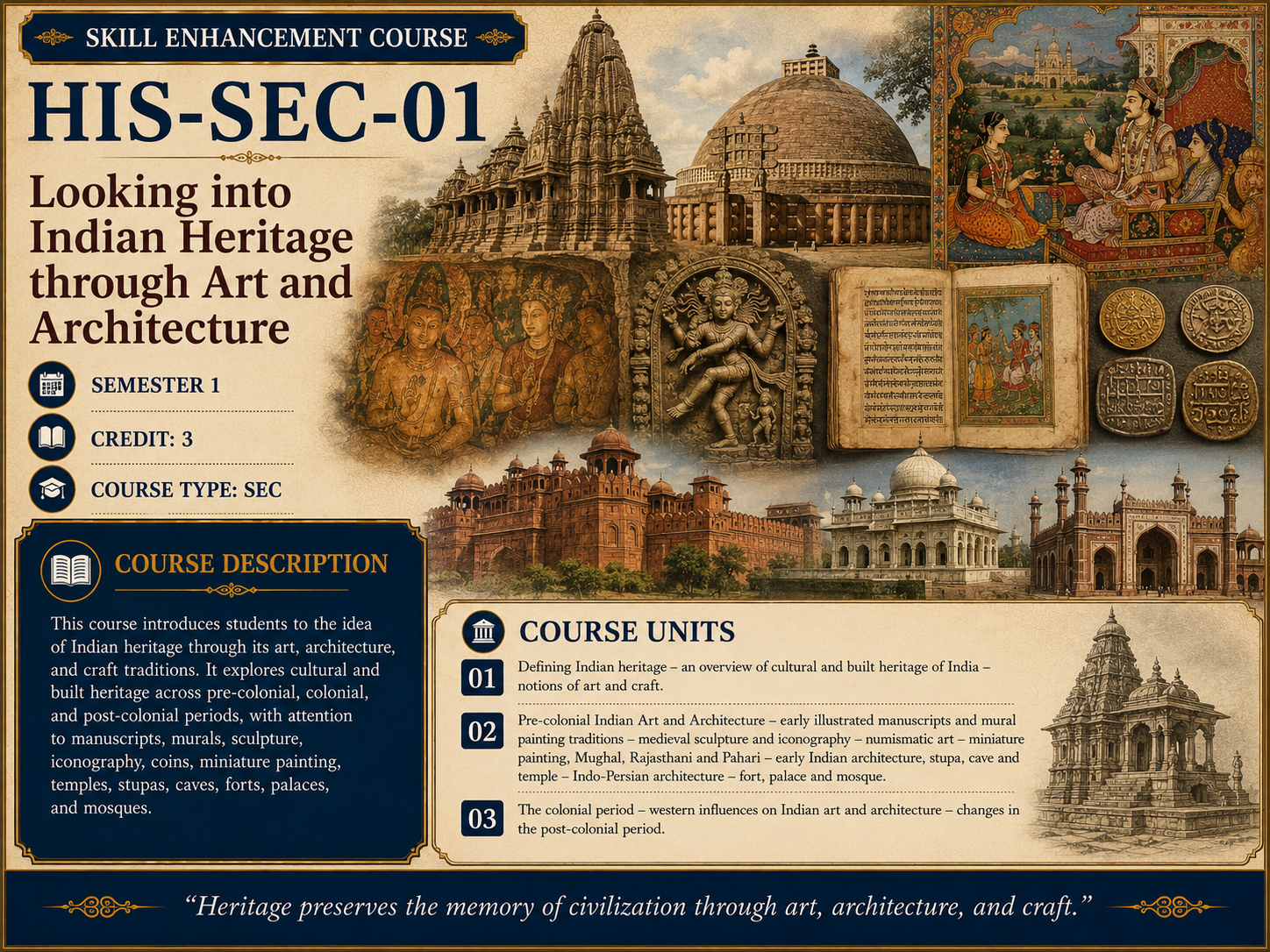
- Define Indian heritage and identify major categories of India's cultural and built heritage.
- Describe pre-colonial Indian art traditions, including manuscript illustration, mural and miniature painting.
- Identify and classify architectural forms such as stupas, cave and temple architecture and Indo-Persian monuments.
- Analyze the influence of Western art and architecture on Indian heritage during the colonial period.
- Evaluate changes and continuities in Indian art and architecture in the post-colonial period.
- Teacher: Subhajit Ghosh
- Teacher: Indrani History
- Teacher: Subhadip History
- Teacher: Subhendu History
- Teacher: Sumila History
- Teacher: Site Owner
- Teacher: Atriya Sarkar
Course Learning Outcomes
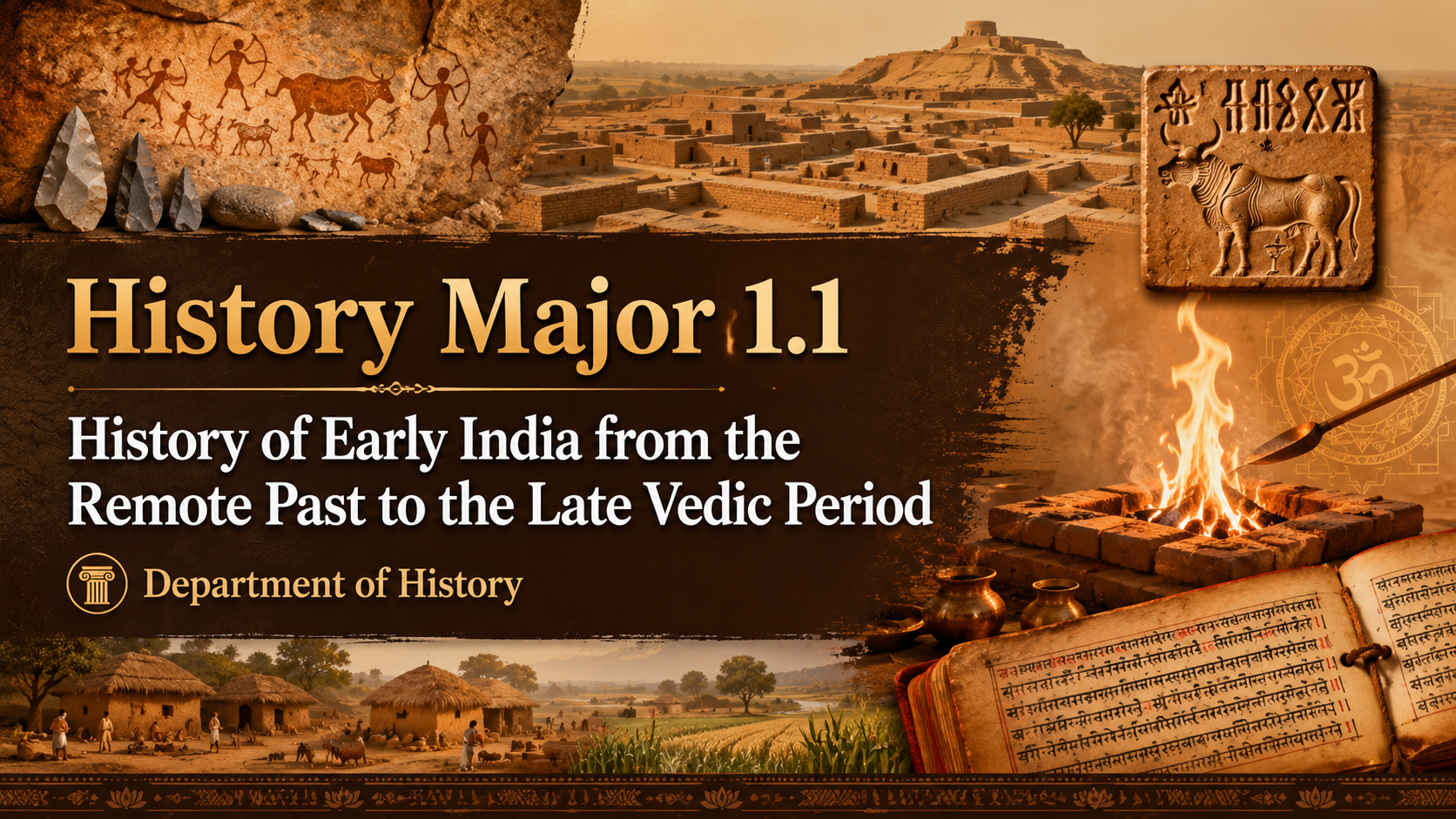
- Recall the major phases of prehistoric and protohistoric cultures in India, from the Paleolithic to the Late Vedic period.
- Explain the salient features of the Harappan Civilization and the debates surrounding the Indus script and its decline.
- Compare imperialist, nationalist, leftist, liberal, secular and religious schools of historiography on early India.
- Analyze the emergence of caste society, organized religion and state territoriality in Vedic and post-Vedic India.
- Evaluate the socio-political and religious factors behind the rise of Magadha as an imperial power and the spread of Ajivikism, Jainism and Buddhism.
- Teacher: Site Owner