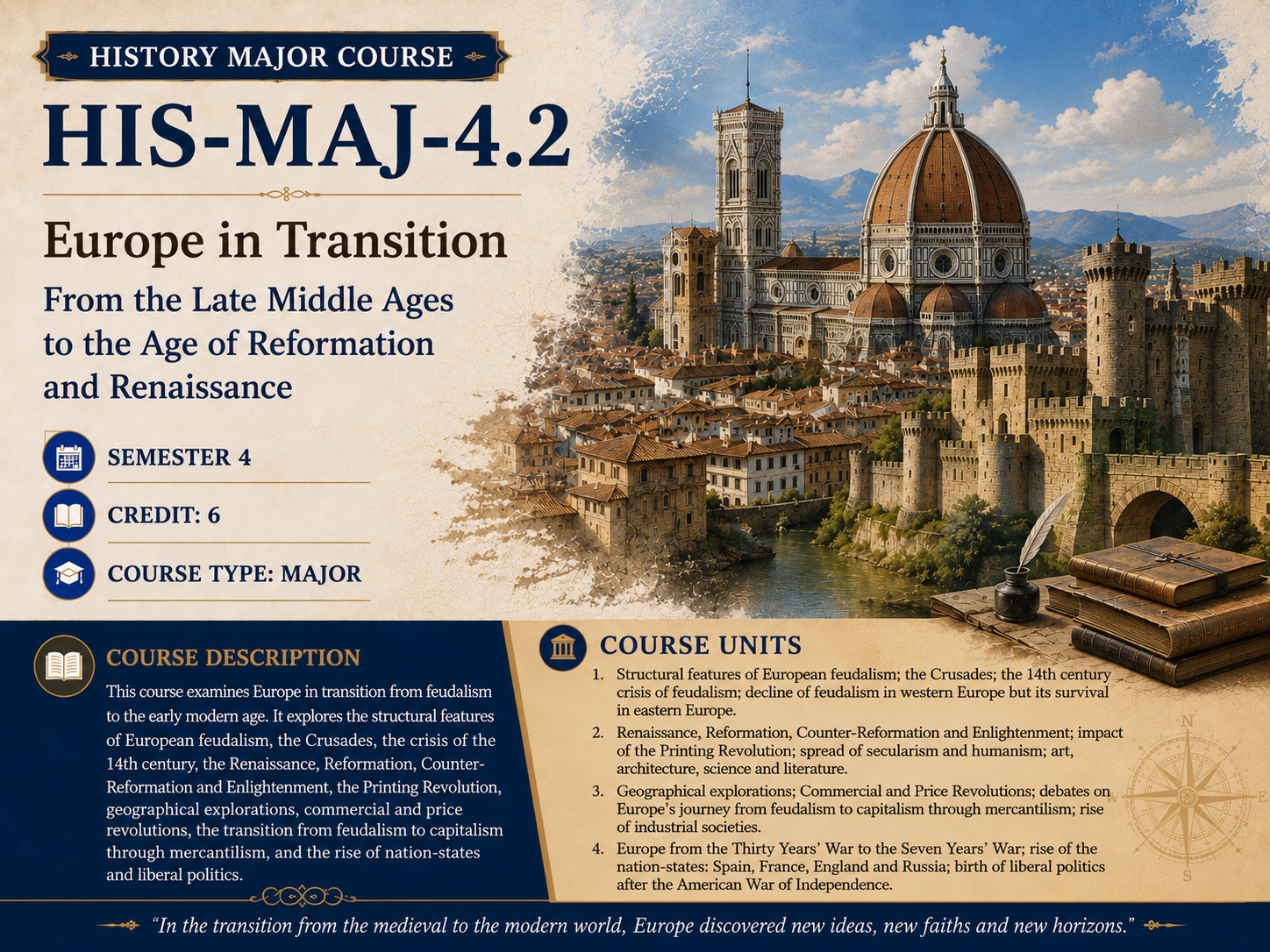
Course Learning Outcomes
- Describe the structural features of European feudalism and the impact of the Crusades and the fourteenth-century crisis.
- Explain the Renaissance, Reformation, Counter-Reformation and Enlightenment as movements of intellectual and cultural transition.
- Analyze the debates on the transition from feudalism to capitalism in the context of geographical explorations and the Commercial and Price Revolutions.
- Trace the rise of the nation states of Spain, France, England and Russia between the Thirty Years' War and the Seven Years' War.
- Evaluate the significance of the American War of Independence in the birth of liberal politics in Europe.
- Teacher: Site Owner
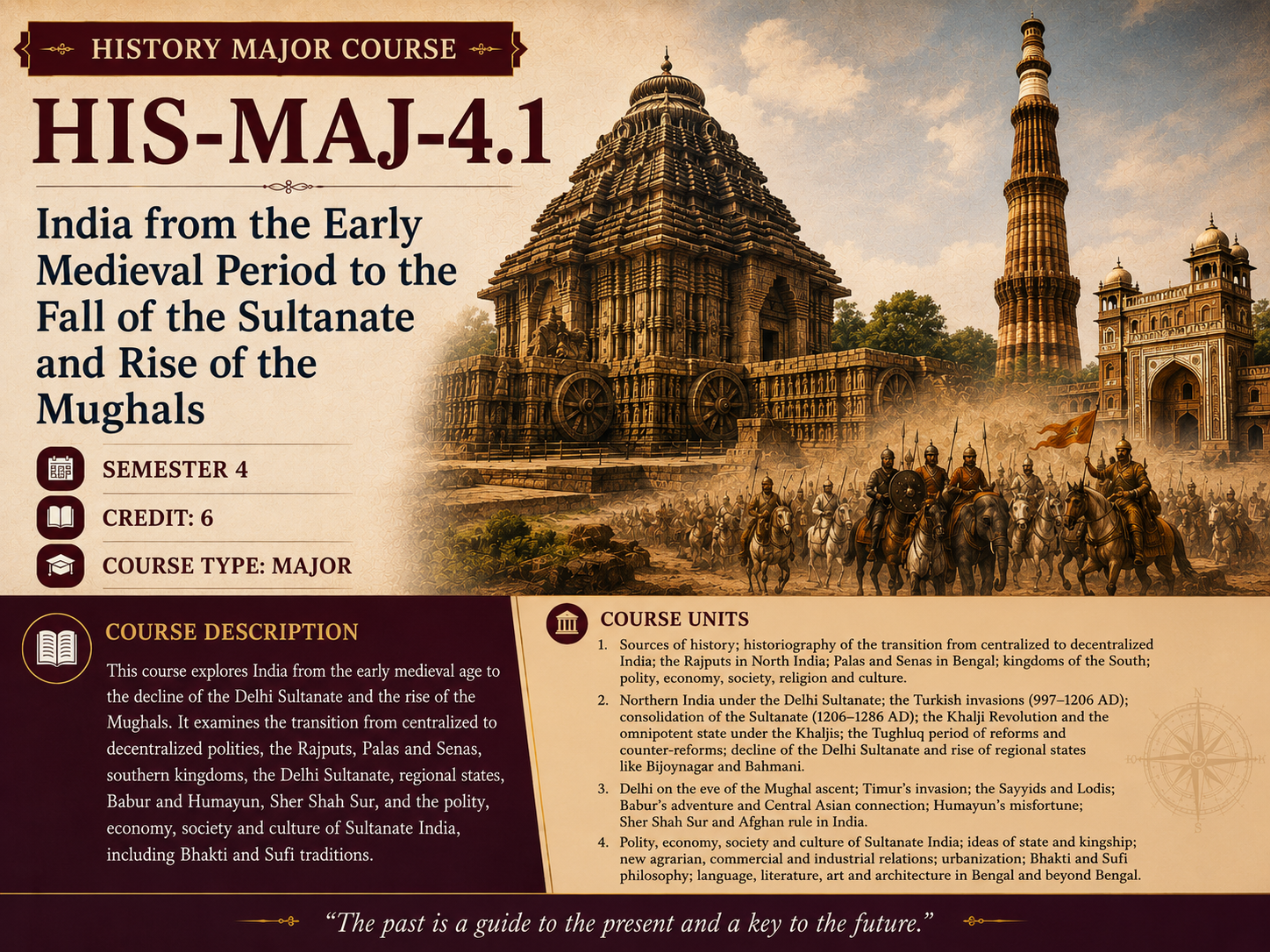
Course Learning Outcomes
- Recall the chronology of political developments from the early medieval period through the Delhi Sultanate to the rise of the Mughals.
- Explain the historiographical debate on the transition from centralized to decentralized polity in early medieval India.
- Analyze the administrative reforms of the Khalji and Tughluq rulers and the causes of the decline of the Delhi Sultanate.
- Describe the socio-economic changes, urbanization, and the Bhakti-Sufi movements of Sultanate India.
- Assess the political and military factors that enabled Babur's establishment of Mughal rule in India.
- Teacher: Site Owner