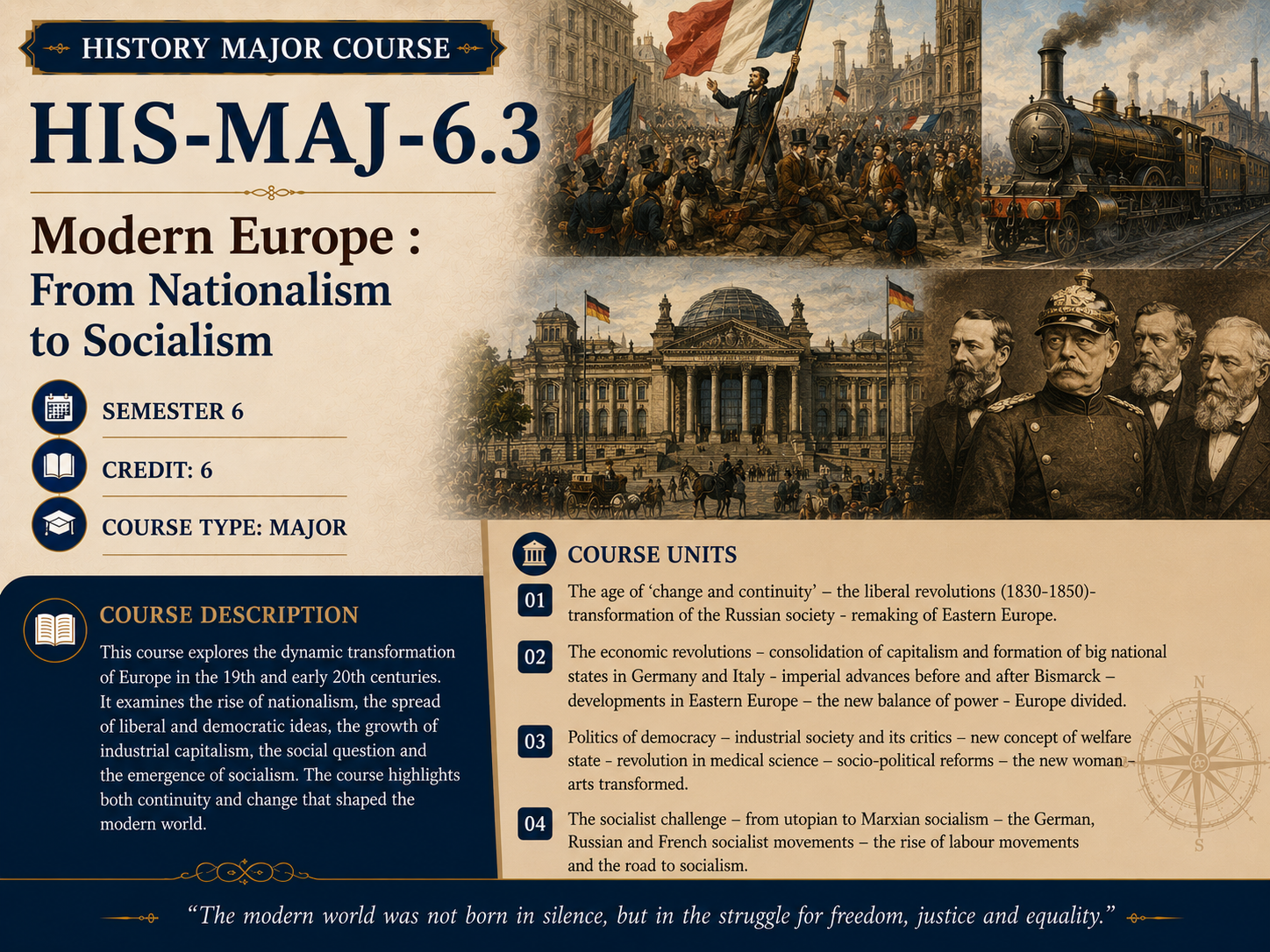
Course Learning Outcomes
- Recall the major liberal revolutions of 1830-1850 and the process of German and Italian unification.
- Explain the economic transformations that consolidated capitalism and led to the formation of new national states in Europe.
- Analyze the diplomatic strategies of Bismarck and the resulting shifts in the European balance of power.
- Describe the rise of democratic politics, the welfare state, and changing gender roles ('the new woman') in industrial society.
- Evaluate the development of socialist thought from utopian socialism to Marxism across Germany, France and Russia.
- Teacher: Site Owner
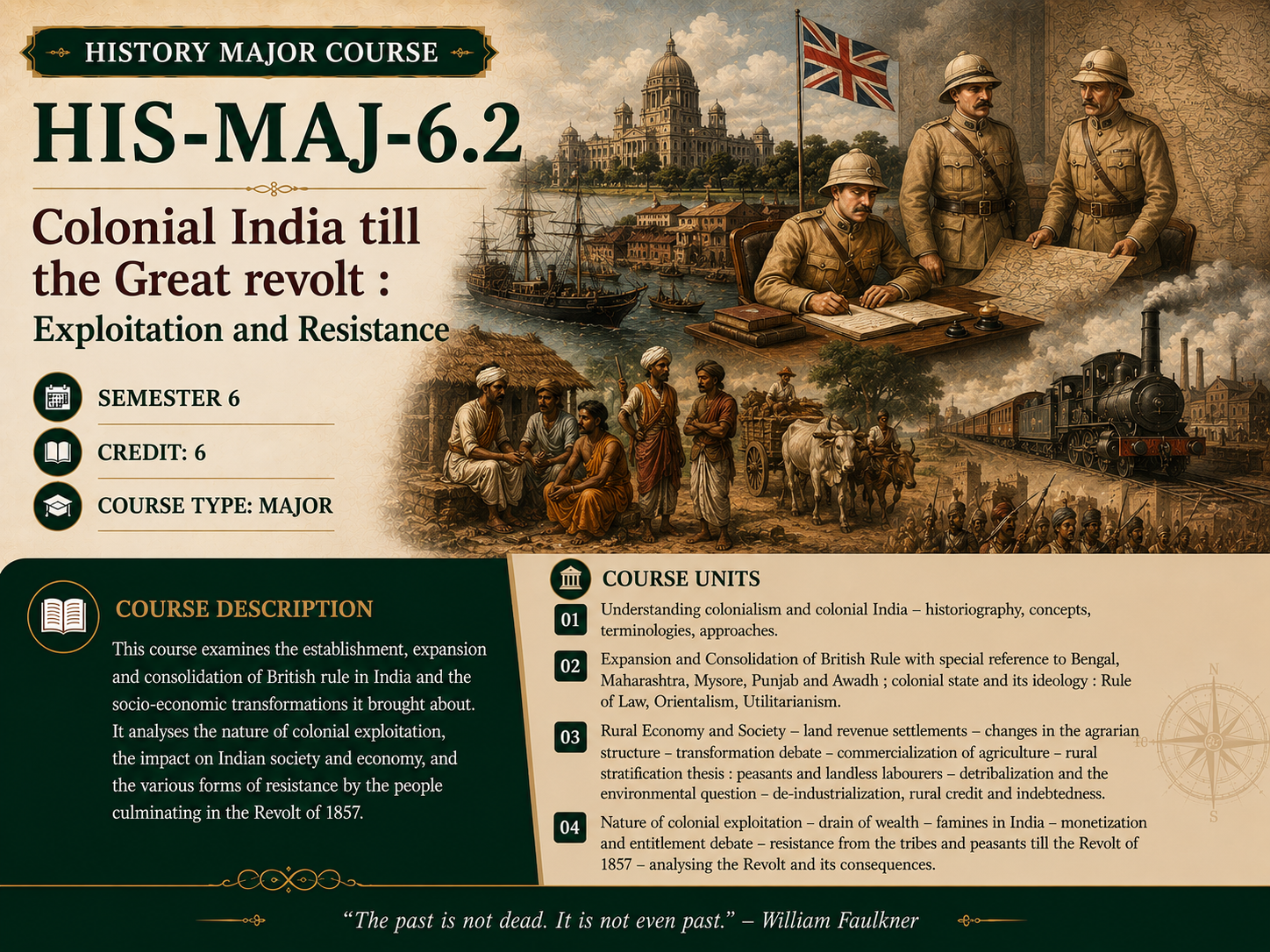
Course Learning Outcomes
- Explain key concepts, terminologies and historiographical approaches to understanding colonialism in India.
- Describe the expansion and consolidation of British rule and the colonial ideologies of the Rule of Law, Orientalism and Utilitarianism.
- Analyze changes in the agrarian structure resulting from land revenue settlements, commercialization of agriculture, and de-industrialization.
- Evaluate the drain-of-wealth thesis and the causes and consequences of famines under colonial rule.
- Analyze the causes, course and consequences of the Revolt of 1857 as a form of resistance to colonial exploitation.
- Teacher: Site Owner
test summary via GET
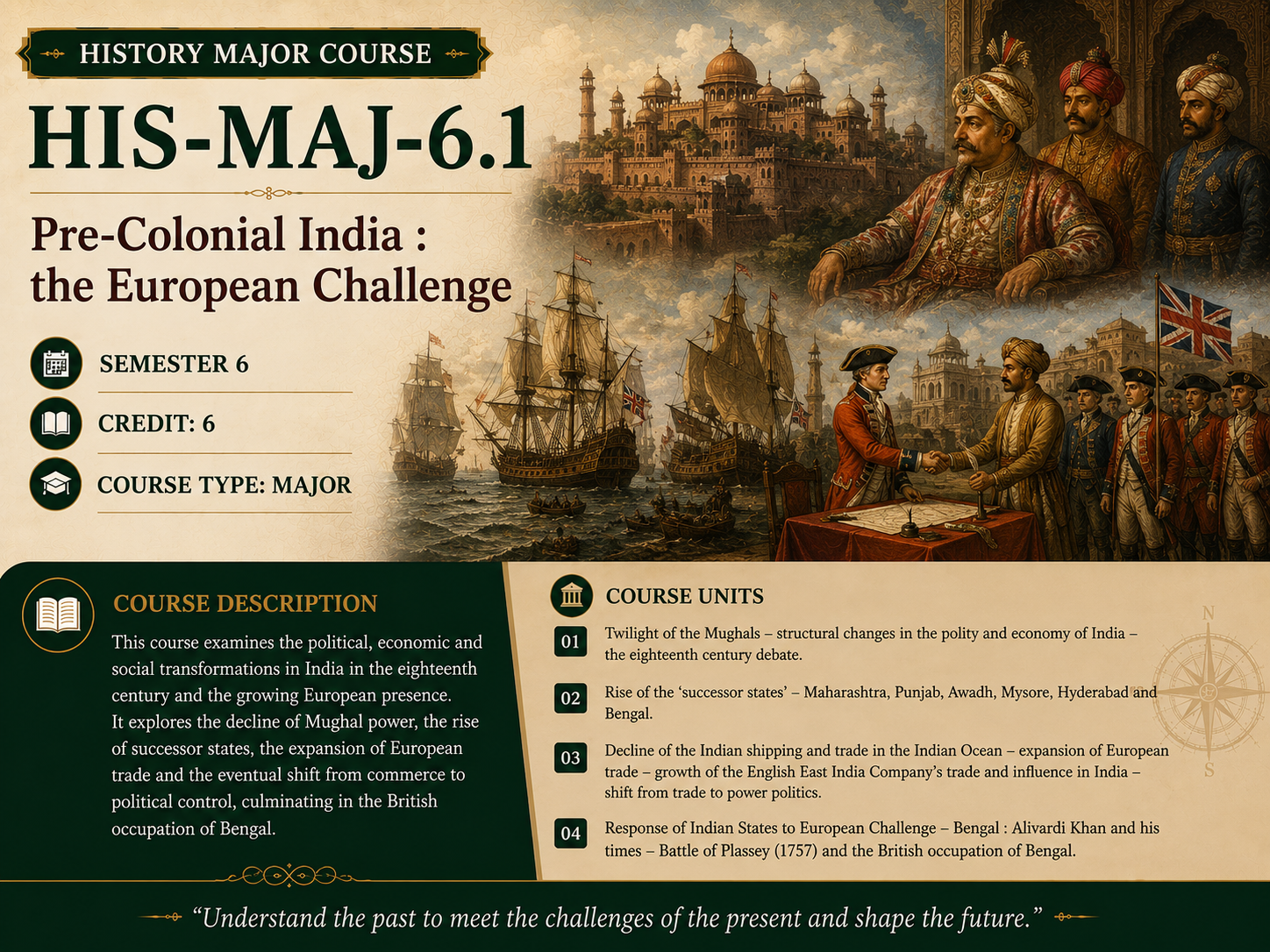
Course Learning Outcomes
- Recall the rise of the eighteenth-century successor states of Maharashtra, Punjab, Awadh, Mysore, Hyderabad and Bengal.
- Explain the structural changes in eighteenth-century Indian polity and economy following the decline of Mughal authority.
- Analyze the decline of Indian shipping and trade in the Indian Ocean and the growth of the English East India Company's influence.
- Compare the shift from trade to power politics among European trading companies in eighteenth-century India.
- Evaluate Bengal's response under Alivardi Khan to the European challenge, leading to the Battle of Plassey and British occupation of Bengal.
- Teacher: Site Owner