Course Learning Outcomes
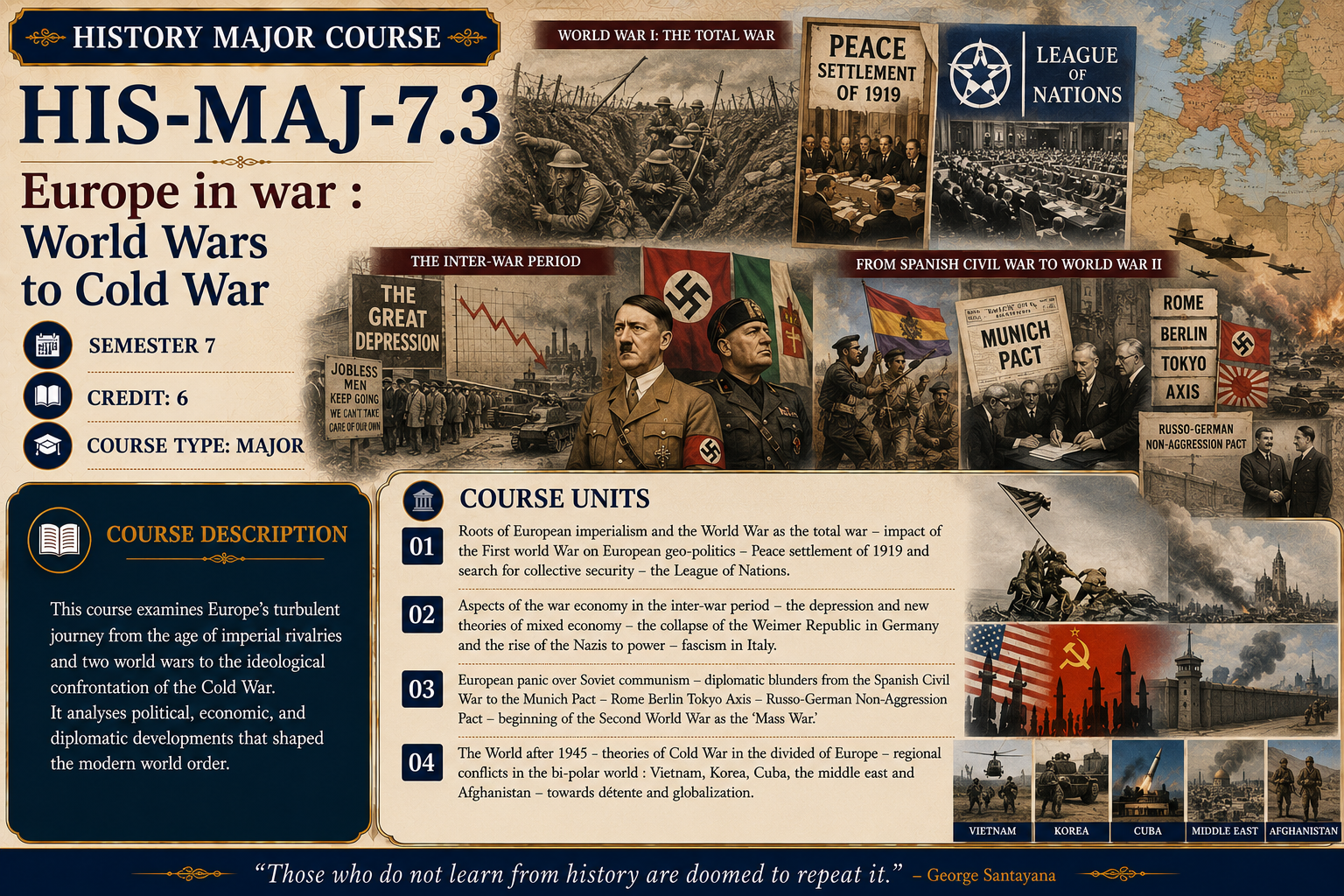
- Recall the sequence of events from the roots of European imperialism through the First and Second World Wars to the Cold War.
- Explain the impact of the war economy and the Great Depression on the collapse of the Weimar Republic and the rise of Nazism and Fascism.
- Analyze the diplomatic failures, from the Spanish Civil War to the Nazi-Soviet Pact, that precipitated the Second World War.
- Evaluate competing theories of the origins and course of the Cold War in a bipolar world.
- Analyze regional Cold War conflicts (Vietnam, Korea, Cuba, the Middle East, Afghanistan) and the movement towards détente and globalization.
- Teacher: Site Owner
Course Learning Outcomes
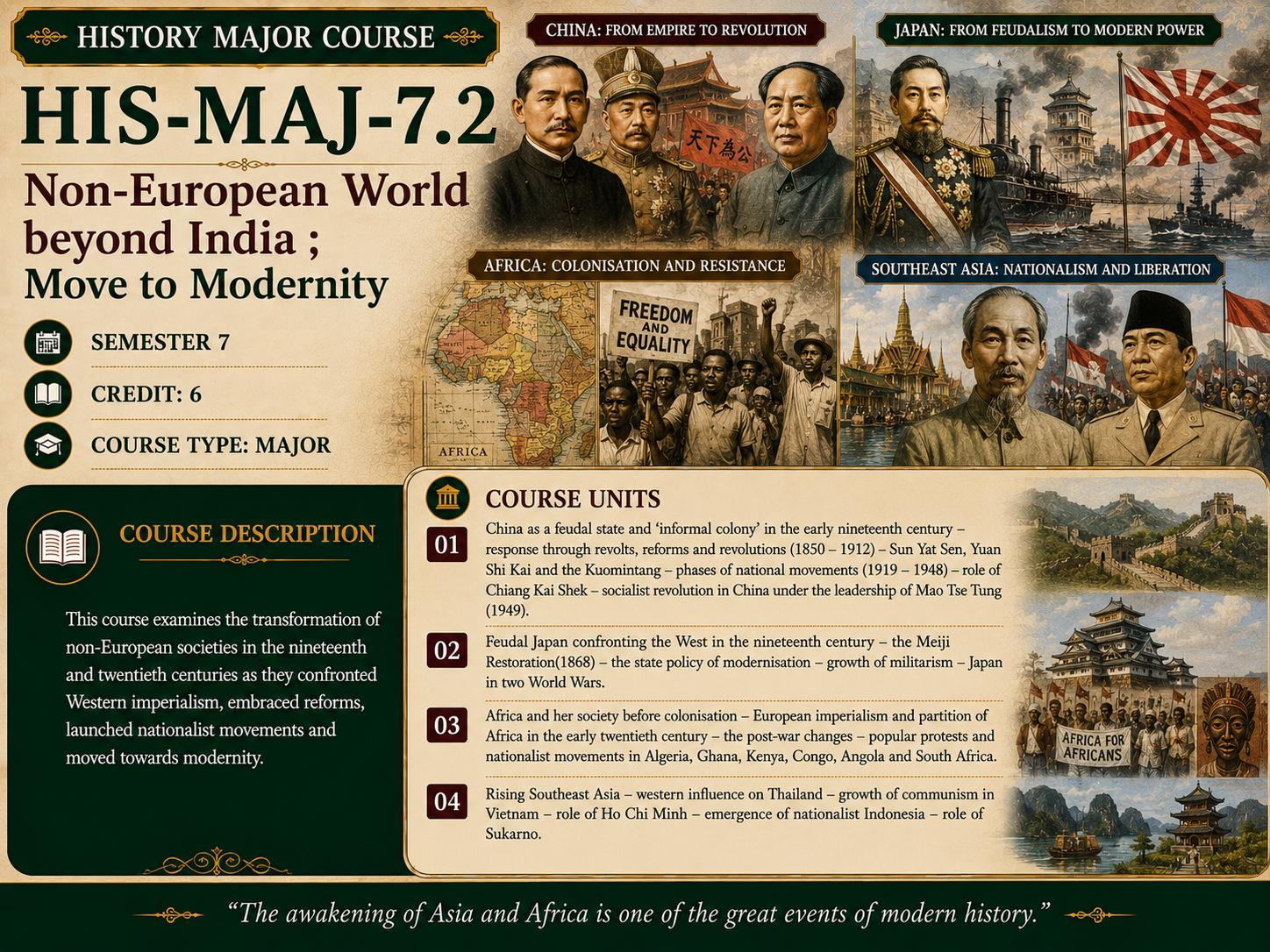
- Recall the major phases of modernization and nationalist movements in China, Japan, Africa and Southeast Asia.
- Explain the Meiji Restoration as a state policy of modernization and its consequences for Japanese militarism.
- Analyze the process of European imperialism and partition of Africa and the emergence of post-war nationalist movements.
- Evaluate the roles of Sun Yat-sen, Chiang Kai-shek and Mao Tse-tung in China's transition from feudal state to socialist revolution.
- Compare the paths to modernity and independence taken by Vietnam, Indonesia and other Southeast Asian nations.
- Teacher: Site Owner
Course Learning Outcomes
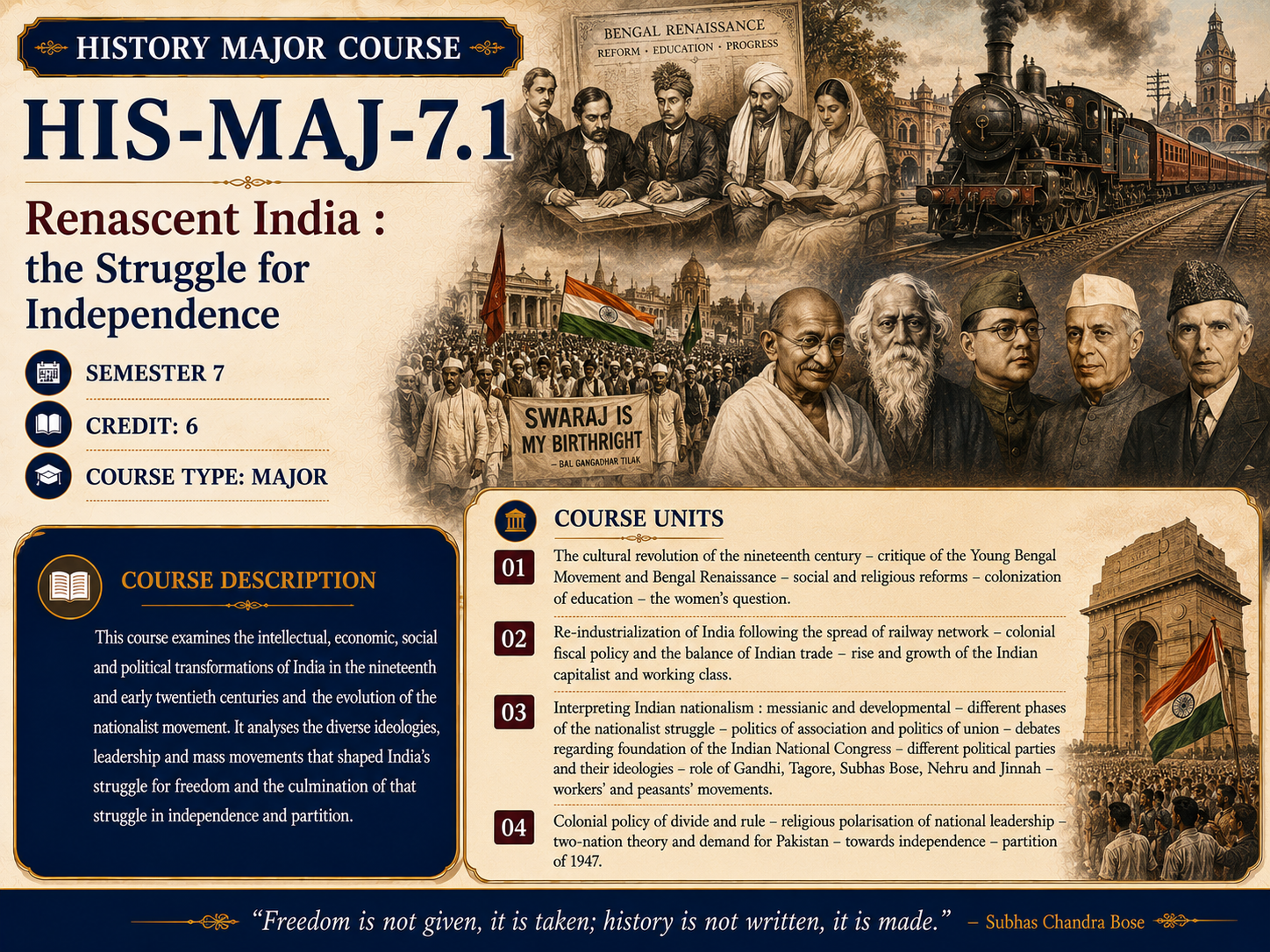
- Recall the major events and leaders of the Indian national movement from nineteenth-century reform to Independence in 1947.
- Explain the cultural revolution of the nineteenth century, including the Bengal Renaissance, social-religious reforms and the women's question.
- Analyze the rise of the Indian capitalist and working classes in relation to colonial fiscal policy and railway expansion.
- Evaluate the differing ideologies and strategies of Gandhi, Tagore, Subhas Bose, Nehru and Jinnah within the freedom struggle.
- Analyze the colonial policy of divide and rule, the two-nation theory, and the events leading to the Partition of 1947.
- Teacher: Site Owner